
Object Record
Images
Metadata
Title |
Dish Towel |
Object Name |
Towel, Dish |
Description |
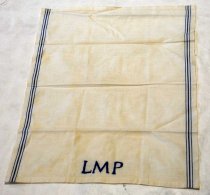
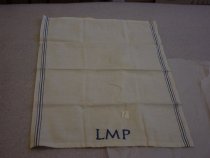
Dish Towel, c. 1926. White rectangular linen towel with three blue vertical lines on each side. At the bottom, center are three, blue embroidered initials "LMP." The first Central School in San Mateo, a two story building built on land that filled a city block. The block was bordered by 1st Ave., San Mateo Dr., Baldwin and Ellsworth. On the Ellsworth side was another two storied gray building. Manual training was taught to boys on the first floor, sewing and cooking on the second floor was taught to girls. The Lawrence, Homestead and Peninsula Schools sent 7th and 8th grade children there once a week. Alice M. Bettin taught the girls sewing and cooking. One of the requirements was to make an apron, headband and towel to use in the 8th grade cooking class. This set was made by the donor c. 1925. |
Date |
c. 1925 |
Creator |
Atkinson, Lavinia |
Role |
Fiber Artist |
Medium |
Textile |
Catalog Number |
1997.071.002 |
Dimensions |
H-21.25 W-17.125 inches |
Collection |
3D - Maintenance Tools & Equipment |
Inscription Text |
"LMP" (embroidered with blue thread, bottom center). |
Notes |
"Dish towels are used to clean, wash and dry dishes. Absorbency and softness are usually two of the biggest factors that influence a dish towel purchase. Both help ensure that moisture is lifted off of dishes and that the dishes remain as close to their original form as possible. For instance, scratchy or hard dish towels may contribute to wear and tear, devaluing dishes and requiring the purchase of new ones sooner than later. A dish towel can be made out of virtually any material. Cotton, terrycloth, linen, microfiber and even hemp are all viable materials from which to make dish towels. While cotton dish towels are the standby for most households, microfiber is an increasingly popular alternative. The special fibers in microfiber material are designed to absorb as much moisture as possible and leave dishes looking spotless. Microfiber can also tackle anything from glassware to chrome. Its multi-purpose function makes it especially attractive to the do-it-yourselfer. Colors and shapes of dish towels are often chosen to compliment the interior of a kitchen, serve as accents or match dishware. Some are used purely for decoration purposes, while others are purchased more for utility than show. Home owners may opt to save money on dish towel purchases by simply reusing old cloths that they have at home made of the same or similar material. As dish towels come into regular contact with kitchen sinks and food particles, they should be cared for properly. The germs and organic material from both these areas threaten to nest in the dish towel material and lead to bacteria growth, which can later lead to disease. Thorough and regular washings of dish towels should be a part of any home owner's regime. Disinfecting dish towels by washing them with bleach or another cleaning agent and letting them dry out in the sun may also help keep bacteria and other unwanted germs at bay. Despite their many uses around the home, dish towels can also serve as housewarming or wedding presents. Domestic gifts such as these often make a new home owner feel welcome in neighborhoods or give a newly married couple a practical item with which to start to their new life. Dish towels come in a wide variety of styles and colors, but for a more personal touch, customization options are available. A monogrammed dish towel is not unheard of and can even help document a special event, day or celebration." [http://www.wisegeek.com/what-is-a-dish-towel.htm 3/8/2017] |
Search Terms |
Home Economics Household Goods San Mateo Central Grammar Schools Towel |
Subjects |
Home economics San Mateo Schools Towels |
Credit line |
Courtesy of Lavinia (Mrs. George) Atkinson |