
Object Record
Images
Metadata
Title |
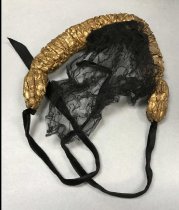
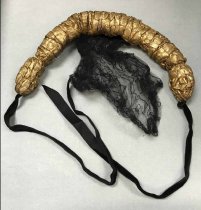
Snood w/ gold headband, c. 1946-1960s |
Object Name |
Snood |
Description |
Snood w/ gold headband, c. 1946-1960s. Snood is small piece of back synthetic nylon netting that has been gathered and machine stitched to the center of the headband; Headband is a fabric tube made of synthetic lurex metallic gold thread that has been stitched to create texture, around most likely a synthetic stuffing; The ends of the headband tube have been wrapped to create knob ends and two synthetic velvet ties are stitched into the tips; Netting is not hemmed and is crinkled. |
Date |
c. 1946-1960s |
Creator |
Unknown |
Role |
Seamstress |
Catalog Number |
2020.021.002 |
Dimensions |
H-5.5 W-11.5 D-1.25 inches |
Dimension Details |
5.5 x 11.5 x 1.25 (headband, not stretched) 7.5 (length of netting, not stretched) 14.5 (length of ties) (object measured on flat surface) |
Collection |
3D - Clothing |
Inscription Text |
none |
Provenance |
Belonged to Ellen Alice Warner Makipaa (Mrs. John) and was worn with a floor-length black dress with an insert of gold satin in the back and short slashed sleeves with gold satin lining. Ellen wore the outfit to Stanford University to hear Nelson Eddy sing c. 1930s. |
Notes |
Snood, either of two types of hair ornament worn by women. The Scottish snood was a narrow circlet or ribbon fastened around the head and worn primarily by unmarried women, as a sign of chastity. During the Victorian era, hairnets worn for decoration were called snoods, and this term came to mean a netlike hat or part of a hat that caught the hair in the back. In the 1930s the name was given to a netlike bag worn at the back of a woman’s head to hold the hair. During World War II snoods were immensely popular in factories, where they were worn to keep hair from being caught in machinery. [https://www.britannica.com/topic/snood] |
Search Terms |
Fashion Fashion Accessories Hair Style |
Subjects |
Hairpieces |
People |
Makipaa, Ellen |
Credit line |
Courtesy of Constance Mills |