
Object Record
Images
Metadata
Title |
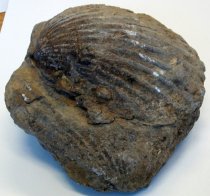
Cardium nuttalli, Cockle Fossil, 1.5 - .75 Ma |
Object Name |
Shell, Animal |
Description |
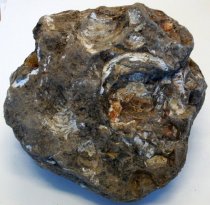
Lyropecten sp., fossil, Miocene dating from between 23.03 to 5.333 million years ago commonly found at low tide in littoral (sandy and muddy bottom) or sub-littoral (open bay, muddy marine) zones. Fossil is comprised of two scalloped-shaped shells, one shell overlapping another, with ribs extending the entire length of the shells. Overall, light brown in hue, as if packed in dirt. Underside surface contains both shell fragments and small shell casts throughout. |
Date |
23.03 to 5.333 Ma |
Catalog Number |
2014.009.046 |
Dimensions |
H-3.5 W-6.25 D-5.75 inches |
Collection |
3D - Biology |
Kingdom |
Animalia (Animals) |
Phylum |
Mollusca (Molluscs) |
Class |
Bivalvia (Bivalves) |
Order |
Veneroida (bivalve order) |
Family |
Pectinidae (Scallops) |
Genus |
Lyropecten |
Species |
sp. |
Inscription Text |
none |
Provenance |
Fossils taken from Merced Formation collected at Westborough Boulevard at Highway 280 in the late 1970s or early 1980s. (See Yancey 1978, Fig. 2: Artifacts taken from E Stratified Section/D-5929). Most specimens (especially clams) in this collection are not extinct and can still be found in the Bay Area. |
Notes |
USGS Emeritus Charles Powel identified on 04/17/2018. Retired Geologist Ken Lajoie identified on 4/8/2014. Cardium nuttali (Common name: Cockle Shell) are large shells, measuring up to 14 centimeters in length. This species still thrives in the Bay Area. |
Search Terms |
Fossils Shellfish Merced Formation South San Francisco |
Subjects |
Fossils Shells Shellfish Marine biology |
Credit line |
Courtesy of Marilyn & Robert Moore |