
Object Record
Images
Metadata
Title |
Brass Oarlock, c. 1870-1890s |
Object Name |
Oarlock |
Description |
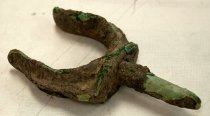
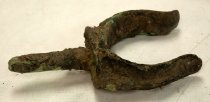
Brass Oarlock, c. 1870-1890s. This brass oarlock is a horseshoe shape with a peg at its base. It is severely corroded. Would be mounted to side of rowboat for oar to rest. |
Date |
c. 1870-1890 |
Creator |
Unknown |
Role |
Manufacturer |
Medium |
Brass |
Catalog Number |
2019.002.037 |
Dimensions |
H-5.75 W-3.25 D-1.25 inches |
Collection |
3D - Water Transportation Equipment |
Inscription Text |
none. |
Provenance |
Part of 4+ boxes of archaeological material recovered from the Morgan Oyster Beds on Bear Island in Belmont, CA. |
Notes |
"A rowlock[1] UK: /'r?l?k/, sometimes spur (due to the similarity in shape and size), oarlock (USA)[2] or gate (Australia) is a brace that attaches an oar to a boat. When a boat is rowed, the rowlock acts as a fulcrum, and, in doing so, the propulsive force that the rower exerts on the water with the oar is transferred to the boat by the thrust force exerted on the rowlock. On ordinary rowing craft, the rowlocks are attached to the gunwales. In the sport of rowing, the rowlocks are attached to outriggers (often just called "riggers"), which project from the boat and provide greater leverage. In sport rowing, the rowlocks are normally U-shaped and attached to a vertical pin which allows the rowlock to pivot around the pin during the rowing stroke. They additionally have a locking mechanism (properly known as "the gate") across the top of the "U" to prevent the oar from unintentionally popping out of the rowlock." https://en.wikipedia.org/wiki/Rowlock |
Search Terms |
Archaeolgy Archaeological Material Archaeological Materials Morgan Oyster Company rowing Boats Transportation Technology |
Subjects |
Boat & ship industry Boats Rowing Rowboats |
Credit line |
Courtesy of John Shroyer |