
Archive Record
Images
Metadata
Title |
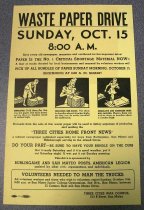
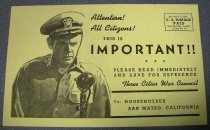
Three Cities Waste Paper Drive Postcard, 1944 |
Object Name |
Postcard |
Scope & Content |
Three Cities Waste Paper Drive Postcard, 1944. This postcard was used to raise awareness of a Waste Paper Drive on Sunday October 15, 1944, located on B Street in San Mateo, CA by the Three Cities War Council which would help in the efforts and relief in World War II. This was directed towards residents of San Mateo. |
Date |
1944 |
Catalog Number |
1982.147.020 |
Extent of Description |
1-Postcard |
Collection |
Archival Collection |
Notes |
"The most important drives occurred early in the War. The rubber drive was particularly important. There were many other drives, including paper drives. The Federal Government estimated early in the War that 20 million tons of paper would be needed for the War. They thought that 7 million tons could come from salvage drives. The paper collected at first hadn't actually been needed. And quantities had been collected far exceeding what was needed. This began to change by 1943 when planners forecast increased needs in 1944. This varied regionally depending on the needs of local factories. Two factors affected the requirements for paper. The production of virgin pulpwood was declining, in large part because of labor shortages. In addition, military requirements were escalating. Paper is not an item strongly associated with the military, but in fact the military used prodigious quantities of paper and paper products like cardboard boxes. The Federal War Production Board (WPB) estimated that 30,000 tons of paperboard was needed monthly just to pack artillery shells. Cartons were needed for K-ration cartons, canned food, and a myriad list of other items. Special containers were made for items like blood plasma. A carload of blue print paper was needed to draw the plans for capital ships like battleships and carries. The army reported that more than 1 million paper milk cartons were used daily in its camps. The biggest problem in collecting newspapers was that the Government was attempting to reduce gasoline consumption through rationing. Thus collecting newspapers could increase consumption of a much more vital resource--petroleum. And because of the quantities involved, an enormous collection effort was needed. Here schools, the Boy Scouts, and other groups played major roles." [http://histclo.com/youth/youth/org/sco/country/us/act/war/w2usa-sdp.htm-2/09/2017] "The need for paper increased during the war. The military's love for paperwork could be blamed, but the military also used lots of paper packaging for supplies. On the civilian side, paper packaging had replaced tin for many products. A paper drive in mid-1942 brought in so much paper that mills were inundated and actually called for a stop. However, by 1944 an acute paper shortage existed. The lumber industry was hard-hit by the manpower shortage caused by the draft. Lumberjacks went on strike, demanding a higher meat ration, which they did not receive. Many of these men left for higher-paying jobs in the defense industry. Publishers found their paper allotment cut by 15 percent. Newspapers, magazines, and books were printed on fewer pages with thinner paper and narrow margins. Paperback books had been introduced in 1939 and also allowed for less paper. However, more scrap paper was needed. The children of America stepped up. The Boy Scouts and local schools organized regular paper drives, often coordinated with the tin can drives. The War Production Board started the Paper Troopers program, designed to sound like "paratroopers," to involve schoolchildren in the effort. Participants received arm patches and certificates for collecting certain amounts." [http://www.sarahsundin.com/make-it-do-scrap-drives-in-world-war-ii-2/-2/09/2017] |
Search Terms |
B Street San Mateo Three Cities War Council War World War II World War Two |
Subjects |
Paper Postcards War World War II |
Credit line |
SMCHA Collection |